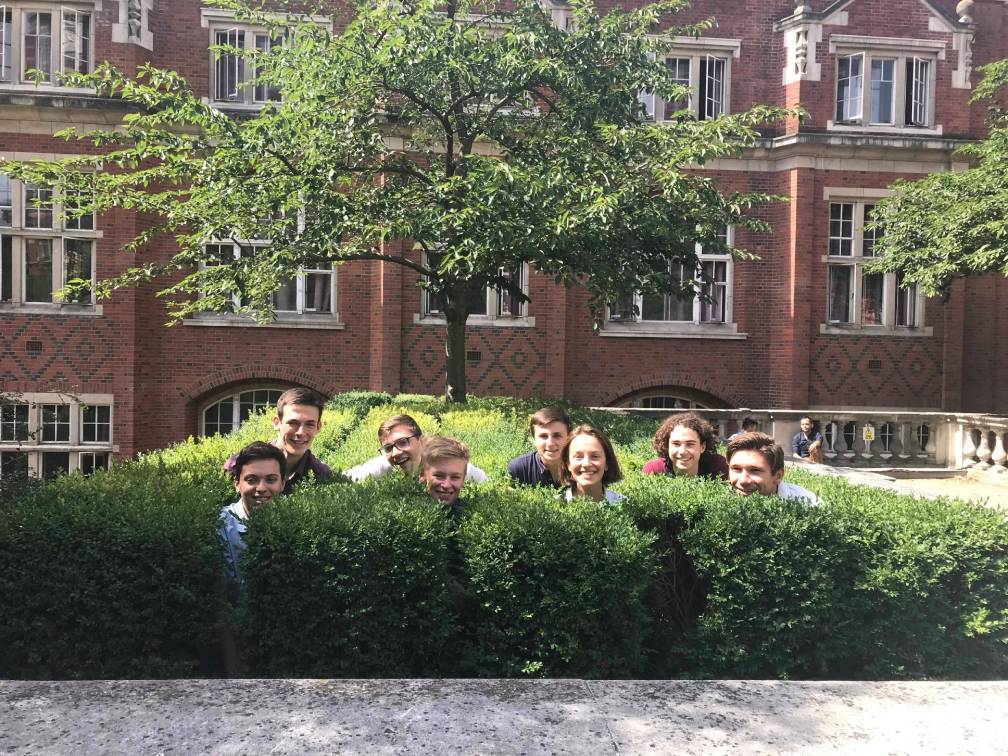
Serena’s Story
24 January 2019


How to utilize your summer breaks smartly? What can you do in these weeks that prepare you for a better future?
Pre-university summer courses in the UK have grown vastly in recent years. This attracts students from across Britain and around the world. These structured and comprehensive programmes prepare students with an intellectual mindset, independence, and confidence that higher education requires.
This guide covers everything you need to know about pre-university summer programmes in the UK: how they work, what subjects are available, how to choose the right one and why students must seriously consider these before going to university.
Pre-university summer courses are short, intensive academic programmes typically held on or near UK university campuses during the summer months. They are designed for students aged 16 to 19 who are either approaching A-Levels or equivalent qualifications. The core purpose is academic growth, helping students build the knowledge, skills, and confidence they need before stepping into a full undergraduate programme.
These are not ordinary revision classes or school holiday activities. They are structured learning experiences modelled on university-style education, often delivered in lecture theatres, seminar rooms, and research laboratories.
Most pre-university summer programmes in the UK run for one to four weeks. Students attend lectures, participate in workshops, complete group projects, and engage in independent study. Assessment methods vary by programme, but many include presentations, written work, or research outputs that give students a sense of what university assessment feels like.
Programmes are hosted at a range of venues, including universities, independent colleges, and dedicated academic centres in cities such as London, Oxford, Cambridge, Edinburgh, and Bristol. Some are fully residential, meaning students live on campus for the duration of the programme. Others offer a day-student option for those based locally.
The structure of each day typically balances:
What sets pre-university summer courses apart from standard school teaching is the style of academic engagement. The curriculum is planned in a way that students are forced to think critically, ask questions, challenge ideas, and form arguments. This mirrors university style seminars and tutorials.
Rather than following a fixed school syllabus, these programmes introduce students to topics and debates that go beyond the classroom. A student studying biology might explore genetic research currently underway at a UK institution.
A student on a business programme might analyse real-world case studies using the same frameworks applied at undergraduate level. This kind of academic experience develops independent thinking.
Eligibility varies between providers, but most pre-university summer programmes in the UK welcome:
Some programmes require a short application form or academic reference. Admission is based on academic potential rather than existing credentials alone, which means students with academic interest can apply for these summer schools.
Pre-university summer programmes offer structured, university-style academic learning for motivated secondary school students. They combine lectures, workshops, and research exposure to deliver genuine academic enrichment.
The United Kingdom consistently ranks among the world's leading destinations for higher education. According to the Higher Education Statistics Agency (HESA), there were 2.86 million students enrolled at UK higher education institutions in 2024/25, and the UK remains the second most popular destination globally for international students (House of Commons Library, 2025).
For students who aspire to study at a UK university, a summer programme is an ideal first step. International summer schools in the UK offer far more than a short academic course they provide:
British universities operate in a very particular way. Tutorials, seminars, independent reading lists, and the expectation of self-directed research can feel unfamiliar to students who come from different educational tradition.
An academic summer programme bridges that gap.
Students who attend a pre-university course in the UK already know how to navigate a university campus, manage an independent workload, and articulate their ideas in both written and spoken form. This support is one of the key reasons international students seek out UK summer school experiences.
UK university campuses are among the most internationally diverse in the world. Between 2018/19 and 2023/24, international student numbers in the UK increased by 47.6%, adding over 236,000 students to UK universities (Studying-in-UK.org, 2026).
A summer programme reflects that diversity. Students attend from across Europe, Asia, the Middle East, North America, and Africa.
This global learning environment is itself an education. Students develop cross-cultural communication skills, learn to collaborate with peers who think differently, and build connections that can last well beyond the summer. For students preparing for a world where international collaboration is the norm, this kind of study abroad summer experience carries long-term value.
The peer relationships formed during a UK summer school frequently develop into lasting friendship. Students who study alongside future lawyers, scientists, engineers, and economists carry those connections with them into their careers.
For international students considering a UK university application, summer programmes also offer something more immediate: an opportunity to speak with current students, visit departments, and build a realistic picture of student life before committing to a multi-year degree. Many participants report that their summer programme experience directly influenced their choice of university and subject.
The UK is one of the most compelling destinations for pre-university international summer school study due to its strong global academic reputation and rich university culture. Its internationally diverse campus environments also provide students with a unique opportunity to learn alongside peers from around the world.
These programmes offer meaningful cultural exchange alongside academic preparation.
There is a meaningful difference between an academic summer programme and a recreational summer camp. The distinction is not simply about what students do during the day; it reflects a fundamentally different purpose.
Traditional summer camps are built around leisure, social activity, and general enjoyment. They have real value for younger children, but for students approaching university, a purely recreational summer experience offers limited academic return.
Pre-university summer courses, by contrast, are structured around intellectual development.
Students on academic programmes are expected to engage with challenging material, contribute to debates, produce work, and reflect critically on what they have learned. The social element is present but it operates in service of the academic experience, rather than in place of it.
| Academic Summer Programme | Traditional Summer Camp |
| University preparation | Recreational focus |
| Research workshops and subject lectures | Sports and activities |
| Academic mentorship from subject specialists | Entertainment-led schedule |
| Career exploration and professional insight | General social experience |
| Structured seminars and critical debate | Unstructured leisure time |
| University-style independent study | Group recreation |
One of the defining features of a quality pre-university programme is research exposure. For example students at LIYSF actively participate in scientific thinking and research and present their work at Science Bazaar. Students engage with real academic questions, work with primary sources or datasets, and present findings to their peers and tutors. This kind of immersive educational experience is different from anything available in a standard school setting.
Students studying medicine might work through clinical case studies. Those on engineering programmes might prototype solutions to genuine design challenges. Law students might participate in moot court exercises modelled on real legal proceedings. The practical application of academic knowledge is a hallmark of the best UK summer programmes.
Higher education preparation is about developing the capacity for independent thought. University tutors do not guide students through every reading or check every piece of work in the way that school teachers do. Students are expected to manage their own learning, identify gaps in their understanding, and pursue answers proactively.
Pre-university summer courses build precisely these habits. By exposing students to a university-style academic environment before they matriculate, these programmes create a meaningful head start — one that helps students thrive rather than simply survive in their first year.
UK academic summer programmes offer substantive educational value that goes well beyond recreational summer activities. Research exposure, subject-specific mentorship, and independent learning opportunities distinguish them clearly from tourism-style camps.
Science, technology, engineering, and mathematics are among the most sought-after areas of study in UK higher education. STEM summer programmes have expanded considerably in recent years, with institutions across the country now offering specialist pre-university provision in these disciplines.
The UK government has identified advanced manufacturing, clean energy, digital technologies, and life sciences as central priorities for economic growth (Parliamentary Office of Science and Technology, 2025). This policy focus has reinforced the importance of early STEM engagement, and pre-university summer programmes are playing a visible role in that pipeline.
The most effective STEM summer programmes go beyond classroom instruction. Students participate in laboratory workshops, practical experiments, and design challenges that put theoretical knowledge to immediate use. This experiential STEM learning model closely mirrors the practical components of undergraduate science and engineering degrees.
At programmes hosted by leading UK universities, students might:
This level of access to university-grade facilities and expertise is rarely available through standard secondary school science provision alone.
One of the most powerful aspects of STEM summer programmes in the UK is their emphasis on application over abstraction. Students explore how STEM disciplines solve real problems. Climate modelling, biomedical device design, artificial intelligence applications, and sustainable energy systems are among the contemporary topics addressed in leading UK science summer programmes.
This connection between academic theory and real-world consequence helps students understand why their chosen discipline matters, which in turn deepens their motivation and long-term academic engagement.
Many STEM summer schools incorporate elements of original inquiry. Students are grouped into small teams, presented with an open-ended problem or research question, and asked to develop and defend a response. This mirrors the collaborative, inquiry-driven culture of university research departments.
The skills developed through this process, hypothesis formation, evidence evaluation, peer review, and academic communication, are highly demanded. Students who arrive at university already familiar with this mode of working have a measurable advantage.
For many students, a STEM summer programme is their first direct encounter with the breadth of careers that a science, technology, engineering, or mathematics degree can lead to. Guest lectures from working professionals, visits to research facilities, and mentoring from PhD students and academics all contribute to a richer, more informed understanding of career pathways.
A student who enters a summer programme uncertain whether to pursue biochemistry or chemical engineering often leaves with a clearer sense of where their interests and strengths lie. That kind of informed decision-making, made before a university application, can shape the entire trajectory of a student's academic career.
STEM summer programmes in the UK are growing in both scale and sophistication, offering pre-university students access to university-grade laboratories, real research exposure, and meaningful career insight well before their undergraduate studies begin.
Pre-university summer courses in the UK are available across an exceptionally wide range of academic disciplines. This breadth of provision allows students to explore a subject in depth, test their interest before committing to a degree, or develop skills that complement their chosen field of study.
Medicine remains one of the most competitive degree pathways in the UK, and medicine summer schools have developed specifically to help students prepare for the demands of the application process. These programmes typically cover:
Medical summer schools often incorporate hospital or healthcare facility visits, interaction with current medical students, and case-based learning drawn from real clinical scenarios. For any student seriously considering medicine, dentistry, or veterinary science, participation in a structured summer school strengthens both their application and their academic readiness.
Business summer programmes attract students interested in management, economics, entrepreneurship, finance, and law. They combine lectures on core business theory with practical case-study analysis, negotiation exercises, and presentations.
Many business summer schools in the UK also incorporate elements of leadership development, ethical decision-making, and global market analysis. Students leave not only with stronger academic knowledge, but with a clearer understanding of the professional environment they are moving towards.
Engineering and computer science summer courses are among the fastest-growing areas of pre-university provision in the UK, driven in part by the significant demand for technology skills across virtually every sector of the economy. Programmes typically include:
Many of these courses are delivered in direct partnership with engineering faculties, giving students access to specialist equipment and academic mentorship that school environments cannot replicate.
Not every student arrives at a summer programme with a fixed subject in mind, and the pre-university courses accommodate that. Interdisciplinary programmes allow students to explore connections between disciplines, combining, for example, environmental science and economics, or history and international relations. These career-focused summer programmes are particularly valuable for students considering courses such as Politics, Philosophy and Economics (PPE), or Combined Honours at university level.
They also model an increasingly important intellectual skill: the ability to draw on multiple disciplines when analysing complex problems.
The subject range available across UK pre-university summer programmes is extensive. Whether a student's ambition lies in medicine, engineering, business, or interdisciplinary study, there is a structured programme designed to develop the academic foundations they need.
Beyond subject knowledge, pre-university summer programmes develop the whole profile of skills and qualities that UK universities look for in their applicants. This is where the strategic value of summer school attendance becomes most apparent, particularly given ongoing changes to how universities assess candidates.
The UCAS personal statement is a central component of UK university applications. From 2026 entry onwards, UCAS has restructured the personal statement into three specific questions, each asking applicants to demonstrate academic engagement, preparation, and suitability for their chosen course (UCAS, 2025).
Academic summer school attendance addresses all three new UCAS questions directly. It provides concrete evidence of:
Admissions tutors at Oxford, Cambridge, and other competitive universities have explicitly noted that academic summer schools, when referenced with specificity and reflection, carry weight in the assessment process.
University seminars require students to articulate ideas clearly, respond to challenging questions, and engage respectfully with perspectives they may disagree with. These communication and collaboration skills do not develop automatically, they need to be practised.
Pre-university summer programmes provide precisely this practice, in an environment that is challenging but supportive. Students who have already presented research to their peers or taken part in structured debates often feel more confident. Receiving feedback from academic tutors also helps them develop skills that are valuable at university.
The transition from school to university is significant. Many students find the shift in academic expectations, social environment, and personal responsibility demanding. Students who have spent a week or two living and learning on a university campus before their first term are better equipped to manage that transition.
Confidence-building translates into academic performance. Students who approach their first seminar knowing what to expect, and who have already demonstrated to themselves that they can operate at that level, are more likely to engage actively and perform well.
Many pre-university summer programmes incorporate opportunities for leadership: coordinating group projects, chairing discussions, mentoring peers during workshops, or presenting findings to academic staff. These experiences contribute to student leadership development in ways that enrich both the university application and the student's broader professional profile.
Universities increasingly look for evidence of initiative, responsibility, and the ability to work constructively with others. Summer school experience, documented thoughtfully in a personal statement or interview, demonstrates all three.
Pre-university summer programmes provide targeted preparation for the UCAS application process, build academic communication skills, and develop the confidence and leadership qualities that universities actively seek in their most successful applicants.
For many students, a residential summer programme is their first extended experience of living independently. Away from home, managing their own time, and navigating a new social environment. This dimension of the summer school experience has significant personal development value, and it addresses one of the most common concerns that students (and parents) have about the university transition.
Residential summer programmes in the UK typically accommodate students in campus halls of residence or purpose-built boarding facilities. The daily structure ensures that students are supported without being dependent. They manage their own schedules within a framework provided by the programme, attending lectures, completing tasks, and participating in evening activities at their own initiative.
This structured residential student experience is a rehearsal for undergraduate life. Students learn to balance academic commitments with social activities, manage their personal spaces, and communicate with adults in a professional rather than domestic context. These are habits that support long-term academic success.
For families sending a student abroad for the first time, safety is a natural priority. Reputable UK boarding summer schools maintain rigorous safeguarding standards, including 24-hour pastoral support, supervised accommodation, and clearly communicated emergency procedures. Staff-to-student ratios are maintained to ensure appropriate oversight without compromising students' developing autonomy.
International students are supported with assistance navigating travel arrangements, healthcare needs, and cultural adjustment. The best programmes treat pastoral care as integral to the academic experience, not an afterthought.
Residential programmes have one significant advantage over day-attendance alternatives: the learning continues beyond the classroom. Informal conversations over dinner, late-evening study sessions, and collaborative project work in shared spaces all contribute to the intellectual depth of the summer school experience.
Students who live alongside their peers develop the kind of collaborative working relationships that are essential in university group work, research projects, and professional environments. Learning to disagree respectfully, distribute tasks fairly, and produce shared work to a high standard are skills best practised in exactly this kind of residential, immersive context.
Residential summer programmes provide meaningful academic preparation. They also help students build independence, resilience, and teamwork skills in a safe and supervised environment.
The range of pre-university summer courses available in the UK is broad, and choosing well requires careful thought. The right programme for one student may not be the right programme for another. The following criteria provide a practical framework for making an informed decision.
The credibility of a summer programme is closely linked to the academic standing of its host institution and the expertise of its faculty. Look for programmes delivered by or in partnership with recognised UK universities, and check whether the teaching staff hold relevant academic or professional qualifications in the subject being taught.
Programmes that publish details of their teaching team, curriculum content, and learning outcomes are generally more transparent about their academic rigour. Where possible, speak to previous participants or consult independent reviews from credible sources.
Students with a clear interest in science, technology, engineering, or mathematics should seek out specialist STEM provision, rather than choosing a general academic programme and hoping for adequate subject depth. Conversely, students who are genuinely undecided about their direction may benefit more from a broader, interdisciplinary programme that exposes them to multiple disciplines.
The decision should be driven by each student's academic goals and university intentions — not simply by programme prestige or location.
Student support encompasses both academic and pastoral provision. Academic support includes access to tutors outside formal lecture sessions, structured feedback on work produced, and clear progression through the programme's curriculum. Pastoral support includes supervision, accommodation management, and access to welfare resources for students experiencing difficulties.
For international students and families, it is particularly important to confirm that the programme provider holds appropriate insurance, follows UK safeguarding legislation, and maintains transparent communication with families throughout the programme.
The most effective pre-university programmes are those that align with a student's longer-term academic and professional ambitions. A student aiming for a career in medicine should prioritise programmes that offer clinical insight and application practice. A student interested in finance should look for programmes that incorporate real market analysis or case study work drawn from the business sector.
Time spent at a summer school that develops subject-specific knowledge and skills is time well invested. Students who can draw a clear line between their summer programme experience and their university ambitions are more compelling applicants, and more prepared undergraduates.
Choosing the right UK summer programme requires assessing academic credibility, subject alignment, pastoral support standards, and the relevance of the programme to each student's specific career and university goals.
This is the question that most students and families ask before committing to a programme. The answer, for the right student with the right programme, is an unambiguous yes.
Students who complete a pre-university summer course arrive at university with a clearer understanding of their subject, more developed study habits, and a stronger base from which to engage with first-year content. These advantages are not marginal — they can make a meaningful difference to academic performance during the critical first year of an undergraduate degree.
For career planning, the exposure to academic and professional contexts during a summer programme helps students make more informed decisions about their degree pathway, optional modules, and extracurricular commitments. Students who have a deeper understanding of their subject often make better academic and career choices. They are also better able to explain those choices to employers and postgraduate admissions tutors.
The peers a student meets during a UK summer school come from educational systems and cultural contexts very different from their own. Building relationships with students from different countries, with different academic perspectives and life experiences, is an investment in a genuinely global professional network.
For students who go on to careers in international business, research, law, medicine, or technology, these early connections carry lasting value.
Beyond the academic and professional dimensions, pre-university summer programmes contribute to personal growth in ways that are harder to quantify but equally significant. Students who have navigated an unfamiliar academic environment, formed new friendships, managed their own time, and produced work they are proud of return home with a stronger sense of their own capabilities.
A clear awareness of what one can do and how one learns best is one of the most important foundations a student can bring into their undergraduate years.
Pre-university summer courses offer measurable academic advantages, meaningful global networking opportunities, and lasting personal development benefits. For students serious about their university preparation, they represent one of the most productive investments of the summer months.
Pre-university summer programmes in the UK are best understood not as an optional extra, but as a strategic step in a student's academic journey. The competitive landscape of UK university admissions, combined with the genuine intellectual and personal demands of higher education, means that students who arrive prepared, confident, and experienced have a distinct advantage.
The distinction between an academic summer programme and a tourism-style recreational camp matters. Genuine university preparation requires intellectual engagement, not just a pleasant experience in a picturesque location. The competitive nature of UK university admissions makes preparation more important than ever. Students who arrive confident, prepared, and experienced often have a clear advantage.
For international students, the value is amplified further. Gaining direct exposure to UK university culture, forming a genuinely global peer network, and navigating an independent residential experience all contribute to a transition into higher education that is confident rather than tentative.
Whatever the subject, the ambition, or the starting point, a well-chosen pre-university summer programme is not simply something to do before university begins. It is part of how university readiness is built: deliberately, purposefully, and well in advance.
1. What are pre-university summer courses in the UK?
They are academic programmes designed to help students prepare for university through lectures, workshops, research projects, and collaborative learning experiences.
2. Are UK summer schools good for university applications?
Yes. They demonstrate academic curiosity, initiative, leadership, and engagement beyond the classroom.
3. What subjects are offered in UK summer programmes?
Popular subjects include STEM, engineering, medicine, business, economics, law, psychology, and computer science.
4. Are residential summer programmes safe for international students?
Most reputable programmes provide structured supervision, secure accommodation, staff support, and organised schedules for student safety and wellbeing.
5. What skills do students gain from pre-university summer programmes?
Students develop communication, teamwork, leadership, independent thinking, research, and problem-solving skills.
6. Why do international students choose UK summer schools?
Students choose the UK for its globally recognised universities, multicultural environment, academic excellence, and exposure to British higher education.
7. Are STEM summer programmes worth it?
Yes. STEM programmes provide practical scientific exposure, career exploration opportunities, and hands-on learning experiences relevant to future careers.